By: Michele McDevitt
The family, one of the most paramount structures of society, plays an integral role in the Church. Parents have shared the gift of human life with their children, and through Baptism, they have enriched them with a share in God’s life. Parents are their children’s first teacher. They help shape their children’s moral character by instilling values, like honesty, love, and responsibility. In the Catholic Church, parents have an obligation to develop their children’s faith. Gaudium et Spes notes that parents are the leading example to their children. It says, “As a result, with their parents leading the way by example and family prayer, children and indeed everyone gathered around the family hearth will find a readier path to human maturity, salvation and holiness,” (GS 48). At an early age, children learn simple prayers from their parents, who are arguably the most effective catechists.
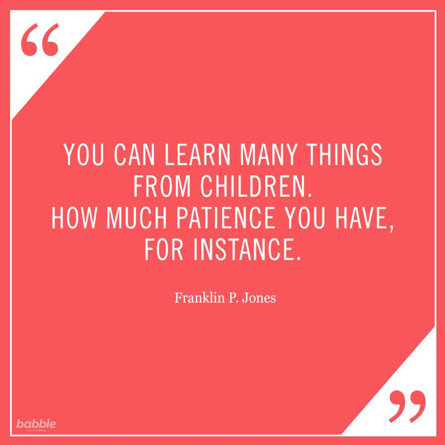
However, children are not the only recipients of learning. Gaudium et Spes declares that, “children contribute in their own way to making their parents holy. For they will respond to the kindness of their parents with sentiments of gratitude, with love and trust,” (GS 48). The interplay between parents and children is what makes family so powerful. In a blog post from “Her View From Home” (a faith-based blog centered on motherhood and children), the author notes that parents are sometimes too engrossed in child-rearing, they fail to see important lessons that children can teach parents.
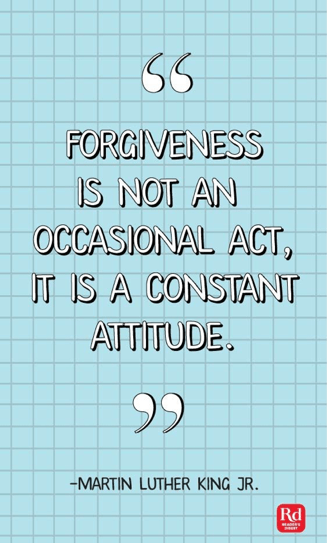
For example, by nature children are curious individuals. Their constant stream of questions, specifically the “why? why? why?”, is their way of ascertaining the truth. Children can renew the spark of curiosity in parents that encourages a constant thirst for knowledge and learning. Children also find joy in the simplest pleasures. They understand that joy can be found anywhere as their imagination runs wild. Converting cardboard boxes into imaginary airplanes enhances their creativity, something parents might lose do to their long days and late nights spent working, caring for the children, and keeping up with the household errands. Lastly, children give parents a sense of newfound patience and forgiveness. Potty-training is hard; mediating arguments is hard; coping with rebellious teenagers is hard. Children give parents the opportunity to grow and to practice their patience. In regards to forgiveness, children tend to get upset one moment, but then they quickly forget about it and move on to another more stimulating task. For example, two children clash over playing with the same toy. They might scream or sulk in the corner for a minute, but very quickly they are back to playing with their friend. They hold no grudges, and they forgive easily because children are innocent and un-jaded. On the flip side, parents are often hardened by their life experiences. It is important for them to remember to practice it, and to be a good example for their children. 
Raising a child is a difficult task (I know I am certainly not ready for it), but the Church reminds us that, “children are really the supreme gift of marriage and contribute very substantially to the welfare of their parents,” (GS 50). In so much as parents gift and teach their children, the children reciprocate equally important lessons that may almost appear invisible unless you are looking for them.
 The Church's Take on Family
Do you think then that married folks without children have “less valued” marriages because of their lack of being able to learn from their children?
LikeLike
I support this idea that children can teach adults so many things. It is so true that children are not the only recipients of learning. Children see things through a different lens than adults, making them good examples of how people should be forgiving, patient, etc. Children especially are known to not be judgmental, discriminatory, and grudge-holding, which is how all people should strive to be.
LikeLike
In addition, Christ often tells us in the Gospels to be like children, so that in itself is an indication that we have much to learn from children. By looking at children as persons from whom they can learn something, instead of just as those they have to teach and care for, parents can learn more about their children and themselves. For example, I have found from my own experience with my younger siblings that often when I find them doing something that is annoying me, that that is something that I myself have a habit of doing, and that they probably picked up from me. In this case, they learned something from me, then I learned that about myself from them. From there, I can correct a bad habit in myself that I did not notice before.
LikeLike
Hello!
When you and your fellow writers of this blog were presenting to the class, I was immediately struck by this idea. Sure, it makes sense, but I had never thought about the raising of children in this way. Relationships are ideally a two-way street, one person does not just pour out themselves to another without the beloved also pouring himself or herself out to the lover. The same applies for familial love. The parent does not raise the child without the child also raising the parent.
The example of children is so beautiful. It was brought up in class, I believe, but children do not discriminate based on race. They are quick to forgive. They are so joyful and full of love for life. We, whether God asks us to be parents or not, can all learn from the children around us to be more loving and more concerned for others.
Thomas N. Dompkowski
LikeLike