By: Michele McDevitt
Pope Francis says that “children are the joy of family and society”. Furthermore, a society that considers children as a problem or hinderance has no future. Pope Francis’s sentiments reflect the catechesis on the family and the Synod of Bishops on the Family. He echoes Gaudium et Spes when he says that the role of children as “a gift of God for parents and society”. Children offers society to discover a nuanced dimension of love, a love that does nothing to deserve it or to earn it.

A recent article in the National Catholic Register speaks about two families who used adoption to create a life-changing gift of the family. The Riley family fostered an infant with a troubled-family history. The adoption process took over five years to complete, however, during this process, Mary Riley (wife and mother to two biological children) realized that no one has a “right” to a child. Instead, as Pope Francis mentioned, she recognized children as a gift. The Riley family began to become actively involved in the foster-care system. In the U.S. alone, there are 422,000 children in foster care. The opioid crisis has caused these statistics to surge even more.
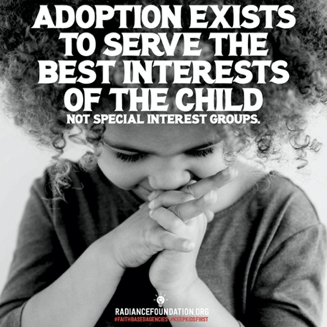
The Wheelers, an Atlanta-based family, have become advocates for children who are stuck in the foster-care system, specifically those who are not allowed to be returned to their parents, yet also unable to be adopted. The Wheelers converted their home to a foster home, and they currently host nine children. When asked how Mrs. Wheeler feels about the constant flow of children in and out of her house, she said, “our hearts have broken when we have loved a child and watched them move on to their family of origin,” she acknowledged; “But God in his mercy and love models how to be a parent to children like this and allows our hearts to be broken and then to recover from that so we can do it again.”
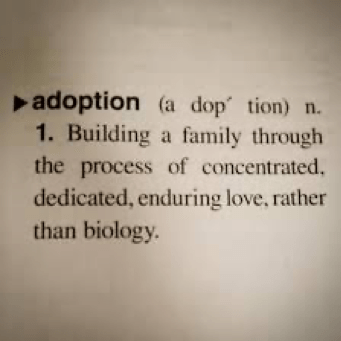
The USCCB asserts that “adoption is a beautiful choice.” Sometimes in modern contexts, adoption gets reduced to an expensive, bureaucratic, legal transfer of parental rights and duties. However in the Catholic Church, adoption is so much more. It is seen as a covenant, one that can be even stronger than biology. This covenant can be seen in Jillian Lauren’s TedTalk where she discusses her family’s journey through the adoption of her son and her unique perspective as being an adoptive mother as well as an adopted child. The USCCB further emphasizes that, “the responsibility then of the adoptive parents is to work for the good of the child, not simply in the physical or economic dimensions, but also in the spiritual one. The creation of a Christian family is not a function of biology. It is grounded in the belief that God creates each of us in His image and likeness, to be fully human and to share in God’s life.” Therefore, it is of the utmost importance to recognize a child’s worth.
 The Church's Take on Family
Michele,
This is a wonderful post! The issues surrounding foster care and adoption in the United States are close to my heart; I’ve considered the possibility of working within the foster care system or potentially becoming a foster parent one day. This. is such a complex issue involving racial bias, underfunding, and an inefficient system. Also, in recent decades this issue has been further complicated by the introduction of reproductive technologies that allow couples who may have previously adopted to have children of their own. I don’t think this issue is one that can be solved quickly or even within a generation, but it is so important to become informed about it especially through the lens of Church teaching. Thank you for looking into this issue and providing an outline of what Gaudium et Spes says about it.
Natalie Bauman
LikeLike