Featured

Welcome!

Hello, and welcome to our blog!

This blog is dedicated to shed light on a specific section of Gaudium et Spes, the family. More importantly, shedding light on how the information seen in Gaudium et Spes relates to the signs of the times. The three authors of the blogs: Scott McKinnon, Marshall Mendoza, and Michele McDevitt have broken down the section into nine main areas of interest ranging in topics from divorce of parents to importance of children in parents’ lives. We hope you can both enjoy and learn from our content!

Why do this?

  • Because by taking prior areas of theological interest and seeing how they still relate today can help to uncover new information regarding ways the Church can improve and grow to reach the masses.
  • Because informing the world about important Papal documents shows even those who are not Catholic the way that Catholics view important social issues and how the Church plans to fix or solve these social dilemmas of the time.

More Info About Our Blog:

  • Why blog publicly rather than keep a personal journal about the topic?
    • Blogging in the public square allows the content to be considered by many, rather than just a few people in a classroom or those in our personal lives. This subject is important and should be available to everyone who is interested.
  • Who would you love to connect with via this blog?
    • As discussed in class, a major area of concern is interreligious dialogue and possibly even more important, dialogue in general. Our blog can become a method of communication between all groups of people looking for a deeper looking at the Catholic document of Gaudium et Spes.

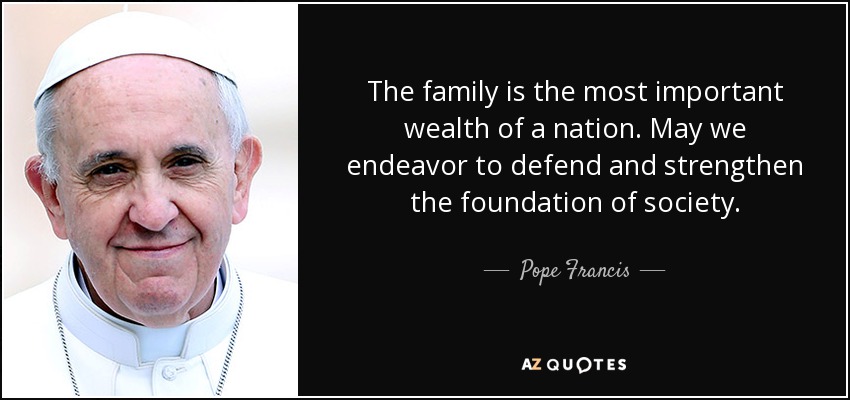
Pope Francis said, “The family is the foundation of co-existence and a remedy against social fragmentation. Children have a right to grow up in a family with a father and a mother capable of creating a suitable environment for the child’s development and emotional maturity.” This quote mirrors our topic because throughout our posts we are diving deeper into the environment of the family and children’s development!

When reading our posts some questions to consider:

  • How can you become an agent of change in your community to bring awareness to problems within the family that get discussed in our blog posts?
  • Is Gaudium et Spes the best document to use when speaking about Catholic values within a family? Is it out of date? Where do you think the Catholic perspective fails in describing familial relationships or current problems within families?
  • What other areas of interest intersect and overlap with the “family” section of Gaudium et Spes? Do these sections inform each other or provide contradicting views regarding Catholic Social Teaching.


Educating the Youth

Parents should regard as their proper mission the task of transmitting human life and educating those to whom it has been transmitted.

Gaudium et Spes 50

Where should children be learning the most valuable information during their youth? This question could bring about answers like school, the playground, or maybe Church, but I would like readers to look at another place: the home. Since every child spends the most time around his or her parents and family members it makes sense that the most valuable education should take place between family members and their children. Gaudium et Spes sees a codependent relationship between children and family members in the sense that children, “contribute in their own way to making their parents holy” (Gaudium et Spes 48) but children can only contribute if they are brought up with strong values as discussed in our other posts. Children can not only become valuable members of the family dynamic they are vital for families to reach their maximum potential. For children to know their worth and how they can contribute within their family they must be properly educated by the family. It is only then that children are able to blossom and help out parents the way that Gaudium et Spes suggests.

As a psychology major, I have researched various studies dealing with attachment theories with children. The way parents treat their children in their youth creates the tendencies for how that child will act when they mature. So, it becomes even more important from both a psychological and theological perspective for education from the family to become a top priority within the home.

Parents are setting the example for their children. Whether it is how to hold a relationship, how to communicate with others, or how to approach faith life children absorb everything that their parents preach to them so I plead with parents and other family members to be a positive influence on every child because it could be the difference of how they turn out in the future.

Family in Modern Times

The well-being of the individual person and of human and Christian society is intimately linked with the healthy condition of that community produced by marriage and family.

Gaudium et Spes 47

Understanding the need for family in a religious and modern context allows for all members of a family to grow together and understand their role. Gaudium et Spes outlines this need in the section titled, “Fostering the Nobility of Marriage and the Family.” After speaking about marriage at some depth the document then transitions into why families can join together in this modern age and reach new heights  be being together; “with their parents leading the way by example and family prayer, children and indeed everyone gathered around the family hearth will find a readier path to human maturity, salvation and holiness” (Gaudium et Spes 48).

The three core values Gaudium et Spes sees as a benefit of having a strong family foundation are extremely important in the modern Catholic world. By reaching maturity within the family, all of the members are then able to venture out into the world and conduct positive dialogue with other members of society. With this strong foundation of maturity the family members will be free to make decisions and take part in change that leads towards salvation, and with salvation as the goal holiness is not very far behind. A question I have from readers is to inflect on your own lives, are you working with your family in a way that fosters growth in the areas of maturity, salvation, and holiness? If not, it is OK! Gaudium et Spes was published with the intention of informing the public about Catholic Social Teaching in the modern world, so it is valuable to read from it and make changes in your life as hyou see fit. In this case, the change that could be made is working within your household to strive towards perfection in these three broad areas. Once that is done, each member of the family will grow closer with themselves, each other, and God and true progress can be seen.

The family is the foundation. Without a strong familial foundation either as a child or an adult, it is hard to leave the household and make positive change within the world. All of the other areas that Gaudium et Spes touches on regarding interreligious dialogue, war, and politics cannot see change if the foundational people and families who are making these changes are not strong in their relationships and ideals. I challenge all readers to use Gaudium et Spes as the pivot point for the way you think about your family and their relationships. Seek out love, positive growth, and happiness and then you will be properly equipped to move into the public square and accomplish the same goals.

The Importance of Having a Family

Image result for a parent's sacrifice

In the past two decades, American women have become increasingly less inclined to have children.  In a study performed by the pewresearch linked below, it was found that “On average, the more education a mother has, the fewer children she will have in her lifetime.”

https://www.pewresearch.org/fact-tank/2018/08/09/middle-children-have-become-rarer-but-a-growing-share-of-americans-now-say-three-or-more-kids-are-ideal/

Although in the same article it is mentioned that this trend is starting to be reversed in more recent years, I have witnessed the social effects of such a trend in my own experience.

I see this trend in my sisters, who frequently jest that they just don’t plan to have kids because a child takes a lot of time and energy to raise.  I see this in my classmates, who say in a more serious tone that they just won’t have kids because they could never see themselves giving up that much of their time for something other than for the pursuit of their dream career.  Lastly, I see this in myself, as I simply cannot imagine having time to raise a mini-me in a world that grows only busier.

One way to view this trend, as my high school Human Geography teacher once told me, is to see it in light of the Demographic Transition Model.  In this model, a country’s stage of development is determined by their birth and mortality rates, which impact the country’s total population.

Under this model, America is under the 4th stage of development, characterized by a steady decline in population due to an average fertility rate of around two kids per woman, which itself stems from an older life expectancy, a stronger economy, and the increase of women in the workforce.  Although this model is not complete, as only time will tell what will become of a country’s population, the model predicts a fifth stage of development, one where the fertility rate drops significantly below replacement and the elderly population becomes the largest population in the country.  Japan is currently in such a situation and, as my Human Geography teacher once told my class, this is the situation America may face one day.

Due to this trend, it is important to explain to the current youth the significance of having children of their own, as America may devolve into a youthless society.  As the Catholic Church puts it, “Children really are the supreme gift of marriage and contribute very substantially to the welfare of their parents” (Gaudium Et Spes, Section 50).  The significant impact children can bear on a parent’s life is itself extraordinary in its own respect, an impact I witness in my mother who, despite securing a stable career as a secretary, found a greater importance in staying at home and raising my sisters and me; my mother even went as far as to leave her home country and move to another one for the sake of her children’s futures.  Only truly impactful things can lead one to do such things as to leave a secure career and live in a different culture. My mother and any parent’s sacrifices for that matter are a testament to the significant impact a child can have on a parent.

When asked “what gives you fulfillment as a person,” my response has always been “I find satisfaction in living for something.  So long as I do that, I have no regrets.” But hearing my mother’s story, I find that there is greater satisfaction in living not for something, but for someone. This is alluded to in Section 50 of Gaudium Et Spes, where the Church explains that it is “God Himself Who said, ‘it is not good for man to be alone’ (Gen. 2:18) and ‘Who made man from the beginning male and female’ (Matt. 19:4), wishing to share with man a certain participation in His own creative work, blessed male and female, saying: ‘Increase and multiply’ (Gen. 1:28).”  Perhaps the satisfaction God felt on the seventh day of creation was the awareness that the love that lead to His creation of the world is ever-present in creation itself, whose love is capable of creating life in the same way.

Despite my inability to imagine myself with the time to have a child, it is because of this nature of love that I nonetheless endeavor to have my own one day, and encourage others to do the same.  As the Church argues, to have a love that creates is its own unique experience; after all, the greatest sacrifice is love.

By: Marshall D. Mendoza

Respecting Children’s Freedom to Choose

Image result for freedom of choice

Growing up in a largely secular public school, I have encountered many peers who were not religious.  In one instance, I conversed with an atheist friend who told me that he was an atheist because he found no reason for believing in an afterlife or practicing religious traditions.  What strikes me from this conversation is not his reasoning, but his sentiment towards atheism due to his mother’s words: when he told his religious mother that he was an atheist, his mother told him that, as a Catholic, she “failed him.”

In another instance, I encountered a peer who is conflicted with her immigrant parents enforcing this idea of marriage at a young age because, in various cultures around the world, it is common practice for the youth to marry at relatively young ages, or even to be forced into an arranged marriage.  The enforcement of this idea by her parents, I have found, only further discouraged her from getting married altogether.

From these two scenarios, it could be said that the source of my peers’ bitterness towards their situation does not result from their choice, but rather by their apparent lack of it.

In mentioning these scenarios, I do not mean to undermine the importance of educating one’s children, especially in religious matters.  In fact, it is a parent’s duty to educate their children about the traditions that regard their family history, and the religious way of life that the parents have chosen that undoubtedly impacts the way the child was fostered.  This is especially true for Catholics, as the Church states in section 48 of Gaudium Et Spes, “graced with the dignity and office of fatherhood and motherhood, parents will energetically acquit themselves of a duty which devolves primarily on them, namely education and especially religious education.”  Such a task will eventually lead to a greater understanding of the “Christian family” and its ability to “manifest to all men Christ’s living presence in the world, and the genuine nature of the Church” (GS, Section 48).

However, in educating their children, the Church warns parents, in matters of religious education, that they “should consult the interests of the family group, of temporal society, and of the Church herself”  (Gaudium Et Spes, Section 50).  It is part of the Church’s teachings to enforce the idea of religious freedom, as “only in freedom can man direct himself toward goodness” (Gaudium Et Spes, Section 17) and, as such, it would only be proper for parents, in educating their children about their religion, to respect the child’s freedom to choose to follow the religion or not.

With regards to my peer’s situation with religious choice, it is also stated by the Church that “Since man’s freedom is damaged by sin, only by the aid of God’s grace can he bring such a relationship with God into full flower” (Gaudium Et Spes, Section 17), so parents in similar situations can find solace and hope in the ability of God’s grace to cultivate their relationship with their children.  Such was the case for Saint Monica, and her son Saint Augustine.

As for the situation with forced marriages, the Church asserts that “no pressure, direct or indirect, should be put on the young to make them enter marriage or to choose a partner” (Gaudium Et Spes, Section 52).  But in general, parents should accept the possibility that their children may live by a culture of their own.  This may not always be the case, but nonetheless, parents should be open to it as culture, whether it be in dialogue with the Church, with communities, or even with individuals, will inevitably develop over time.

Ultimately, only in respecting their children’s freedom of choice can parents truly embrace a family that lives in a world riddled with the signs of the times.

By: Marshall D. Mendoza

The Culture of Life: Foster Care & Adoption

By: Michele McDevitt

Pope Francis says that “children are the joy of family and society”. Furthermore, a society that considers children as a problem or hinderance has no future. Pope Francis’s sentiments reflect the catechesis on the family and the Synod of Bishops on the Family. He echoes Gaudium et Spes when he says that the role of children as “a gift of God for parents and society”. Children offers society to discover a nuanced dimension of love, a love that does nothing to deserve it or to earn it.

Children 1

A recent article in the National Catholic Register speaks about two families who used adoption to create a life-changing gift of the family. The Riley family fostered an infant with a troubled-family history. The adoption process took over five years to complete, however, during this process, Mary Riley (wife and mother to two biological children) realized that no one has a “right” to a child. Instead, as Pope Francis mentioned, she recognized children as a gift. The Riley family began to become actively involved in the foster-care system. In the U.S. alone, there are 422,000 children in foster care. The opioid crisis has caused these statistics to surge even more.

Children 2

The Wheelers, an Atlanta-based family, have become advocates for children who are stuck in the foster-care system, specifically those who are not allowed to be returned to their parents, yet also unable to be adopted. The Wheelers converted their home to a foster home, and they currently host nine children. When asked how Mrs. Wheeler feels about the constant flow of children in and out of her house, she said, “our hearts have broken when we have loved a child and watched them move on to their family of origin,” she acknowledged; “But God in his mercy and love models how to be a parent to children like this and allows our hearts to be broken and then to recover from that so we can do it again.”

Children 3

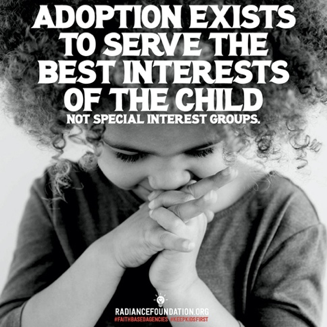
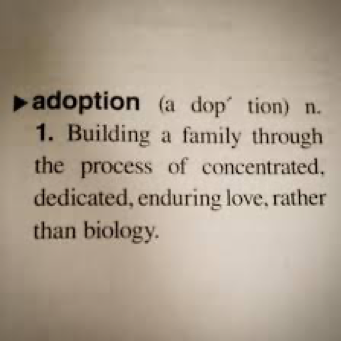
The USCCB asserts that “adoption is a beautiful choice.” Sometimes in modern contexts, adoption gets reduced to an expensive, bureaucratic, legal transfer of parental rights and duties. However in the Catholic Church, adoption is so much more. It is seen as a covenant, one that can be even stronger than biology. This covenant can be seen in Jillian Lauren’s TedTalk where she discusses her family’s journey through the adoption of her son and her unique perspective as being an adoptive mother as well as an adopted child. The USCCB further emphasizes that, “the responsibility then of the adoptive parents is to work for the good of the child, not simply in the physical or economic dimensions, but also in the spiritual one. The creation of a Christian family is not a function of biology. It is grounded in the belief that God creates each of us in His image and likeness, to be fully human and to share in God’s life.” Therefore, it is of the utmost importance to recognize a child’s worth.

Divorce: What about the children?

Divorce 1

By: Michele McDevitt

Divorce is a prevalent occurrence in modern-day society. At least 50% of marriages end in divorce. Therefore, divorce has become more normalized in society. Overtime, society has learned to adjust and to reconstruct the family life and how it operates. The Catechism of the Catholic Church states, “Divorce is immoral also because it introduces disorder into the family and into society. This disorder brings grave harm to the deserted spouse, to children traumatized by the separation of their parents and often torn between them, and because of its contagious effect which makes it truly a plague on society.”

Unfortunately when divorce arises, a child’s upbringing takes a back seat. As mentioned in the Catechism of the Catholic Church, one of the main concerns of a divorced home is that the family structure has been broken. The impact of divorce has a negative influence on children within the home. Psychological studies have shown that within the first two years after parents separate, children are likely to experience distress, anxiety, anger, and disbelief.

Divorce 2

“The plague of divorce,” as the Church refers to it, (GS 47), affects children emotionally, mentally, and behaviorally. Children experience great emotional impact as they struggle with switching between homes, either for weekends or holidays. Young children especially fear that the divorce is their fault, and they worry that if their parents stopped loving each other, one day their parents might stop loving them. Older children may grow to resent their parents due to all the upheaval among the family. Academic performance is often stunted, and “risk-taking” behaviors are increased, such as alcohol and drug use.

Divorce 3

Divorce can also have lingering effects. According to the article, “The Baggage Adult Children of Divorce Carry,” in the National Catholic Register, it asserts that for these “adult children” divorce had inflicted “a wound at the depths of their being.” Father Antonio Lopez, the Dean of the John Paul II Institute for Studies in Marriage and the Family, states that, “By severing the child from his or her origins in love, divorce puts the child’s “filial” identity into question, and together with it, the goodness of his or her existence,” (NCR, “The Baggage”). A philosophical question can emerge as the adult child contemplates, “Who am I now that the two people who together made up my origin have gone their separate ways?”. The unresolved confusion that plagued these people as children followed them into adulthood. Even in a “good divorce”, pain and complication still exist as well as emotional scars. Kelly Clarkson’s iconic song of the 2000s, Because of You, touches on the emotional trauma that a young adult woman faces as a result of a broken family.

Role Reversal: What Children Can Teach Their Parents

By: Michele McDevitt

Family 1

The family, one of the most paramount structures of society, plays an integral role in the Church. Parents have shared the gift of human life with their children, and through Baptism, they have enriched them with a share in God’s life. Parents are their children’s first teacher. They help shape their children’s moral character by instilling values, like honesty, love, and responsibility. In the Catholic Church, parents have an obligation to develop their children’s faith. Gaudium et Spes notes that parents are the leading example to their children. It says, “As a result, with their parents leading the way by example and family prayer, children and indeed everyone gathered around the family hearth will find a readier path to human maturity, salvation and holiness,” (GS 48). At an early age, children learn simple prayers from their parents, who are arguably the most effective catechists.

Patience

However, children are not the only recipients of learning. Gaudium et Spes declares that, “children contribute in their own way to making their parents holy. For they will respond to the kindness of their parents with sentiments of gratitude, with love and trust,” (GS 48). The interplay between parents and children is what makes family so powerful. In a blog post from “Her View From Home” (a faith-based blog centered on motherhood and children), the author notes that parents are sometimes too engrossed in child-rearing, they fail to see important lessons that children can teach parents.

For example, by nature children are curious individuals. Their constant stream of questions, specifically the “why? why? why?”, is their way of ascertaining the truth. Children can renew the spark of curiosity in parents that encourages a constant thirst for knowledge and learning. Children also find joy in the simplest pleasures. They understand that joy can be found anywhere as their imagination runs wild. Converting cardboard boxes into imaginary airplanes enhances their creativity, something parents might lose do to their long days and late nights spent working, caring for the children, and keeping up with the household errands. Lastly, children give parents a sense of newfound patience and forgiveness. Potty-training is hard; mediating arguments is hard; coping with rebellious teenagers is hard. Children give parents the opportunity to grow and to practice their patience. In regards to forgiveness, children tend to get upset one moment, but then they quickly forget about it and move on to another more stimulating task. For example, two children clash over playing with the same toy. They might scream or sulk in the corner for a minute, but very quickly they are back to playing with their friend. They hold no grudges, and they forgive easily because children are innocent and un-jaded. On the flip side, parents are often hardened by their life experiences. It is important for them to remember to practice it, and to be a good example for their children. Patience 2

Raising a child is a difficult task (I know I am certainly not ready for it), but the Church reminds us that, “children are really the supreme gift of marriage and contribute very substantially to the welfare of their parents,” (GS 50). In so much as parents gift and teach their children, the children reciprocate equally important lessons that may almost appear invisible unless you are looking for them.

Forgiveness

The Care of Youth

Tupac Shakur, a renowned rapper, once said that THUG LIFE stood for “The Hate U Gave Little Infants Fs Everybody.”  Although the term thug life has its own negative connotations, Shakur’s acronym is significant in that it summarizes a trend in parenthood: that an unloved child will cause many problems for society.

Image result for tupac thug life

This phenomenon can be outlined through a sociological test known as the “still face experiment.”  In such an experiment, a parent, who normally interacts with his or her infant with a variety of facial responses is asked to keep a still face in front of his or her infant for some time.  The result of this experiment, oftentimes, is that the infant becomes frustrated at the parent’s lack of reaction and cries. This experiment shows, that even at one years old, a child can develop feelings of frustration, not only from a parent’s neglect of physical needs but also from emotional neglect.

Often times the problem that causes parents to ignore their child’s emotional needs is not an ignorance of this aspect of human psychology.  As people who were once children themselves, parents should already have an idea of what children truly need. The problem stems from a lack of time.

In a world that grows only busier, people find themselves less able to set time aside to raise children.  However, the Church argues that this should not discourage parents from putting time aside to raise their children, stating in section 52 of Gaudium Et Spes, “to achieve the full flowering of its life and mission, it needs the kindly communion of minds and the joint deliberation of spouses, as well as the painstaking cooperation of parents in the education of their children.”  To raise a child requires the efforts of both mother and father, and the pay off is the creation of “the family, in which the various generations come together and help one another grow wiser and harmonize personal rights with the other requirements of social life, is the foundation of society” (GS, Section 52).  Done right, a child who is raised to his or her fullest potential as a member of society can greatly impact the world of tomorrow in a way no singular career can.

Although mothers and fathers are the ones that are mainly responsible for the upbringing of their child, it is also the community’s shared responsibility to take proper care of the general youth.  The Church adds, “Children too who unhappily lack the blessing of a family should be protected by prudent legislation and various undertakings and assisted by the help they need” (GS, Section 52). As a society, people should be more wary of how they treat children who were not blessed with a family’s love because it is these same children who will one day carry the torch of society, and the fate of that torch will lie in their hands.

It should be noted that every family has its circumstances, and there is no formulaic way to raise a child.  But a child is the responsibility of both the parents and the community, and in order to foster a child that can contribute to society in “light of the Gospel,” parents must set aside time to raise their kids, and the community must give proper care to the youth.  It is only through this way can the cyclical nature of THUG LIFE be discontinued.

By: Marshall D. Mendoza


Design a site like this with WordPress.com
Get started